What is watch modding?
If you've ever looked at a Rolex Datejust and thought, that's beautiful, but I will never spend ten thousand dollars on a watch — there is a global community of hobbyists building near-identical watches in their spare rooms for around five hundred. They call it modding. This is how it works, who does it, and how the whole thing started.
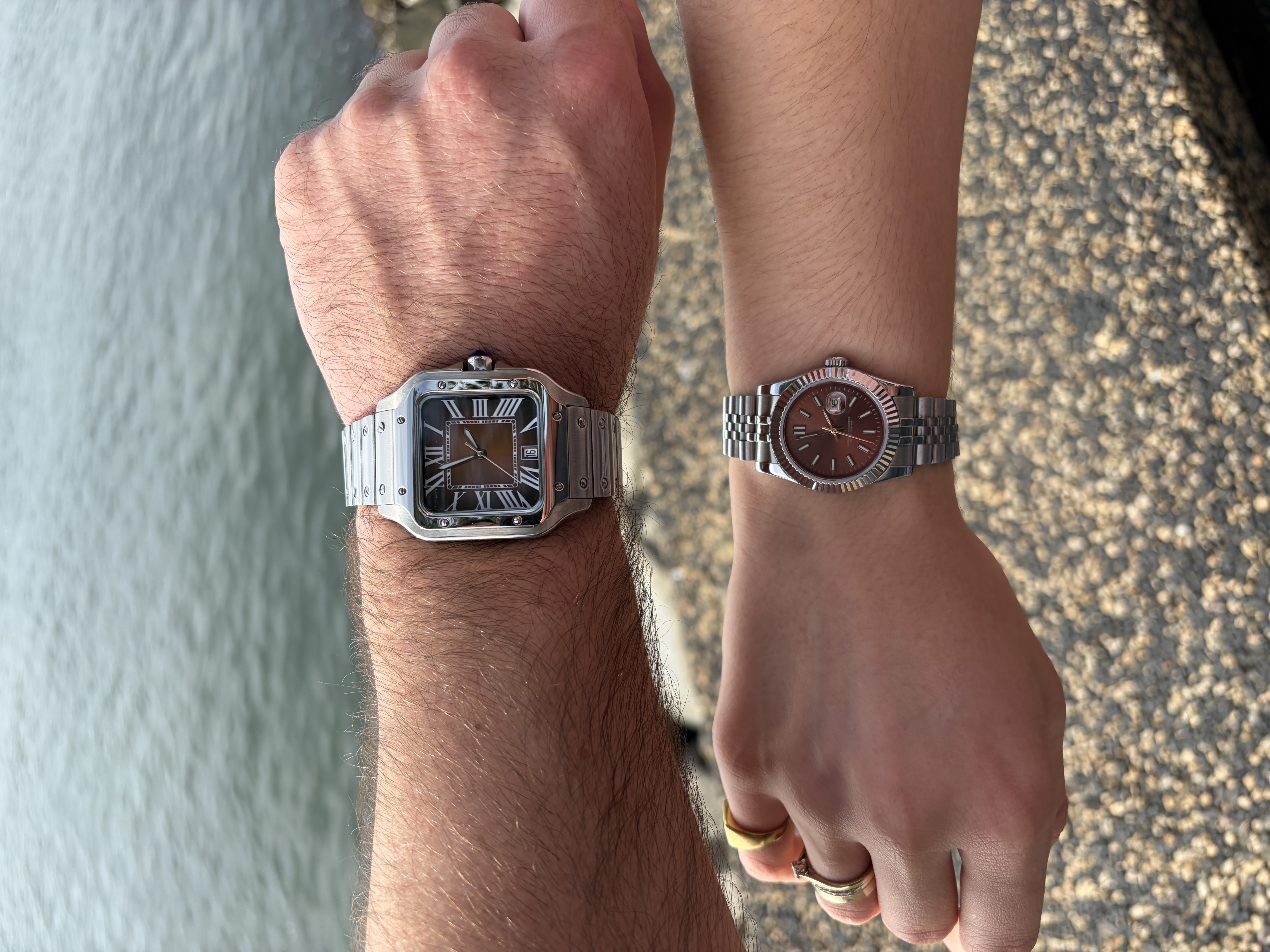
The plain definition
Watch modding is the practice of assembling and customising mechanical watches from a mix of off-the-shelf movements (usually Japanese) and aftermarket parts (cases, dials, hands, bezels, bracelets) sourced from a global supply chain that has built up around the hobby. The mods range from gentle — swap the strap on a Seiko Submariner for a leather NATO — to total — buy a movement, a case, a dial, a set of hands, and a bracelet, and assemble a whole watch from scratch.
At its furthest, modding becomes indistinguishable from small-batch independent watchmaking. The watches that come out the other end are real, mechanical, accurate, properly built. They keep time. They last decades. The only thing they don't carry is a brand-name logo, which to a modder is the point.
Where it came from
The modding scene as we know it today grew out of the Seiko diver community in the 2000s. Seiko had been making affordable mechanical dive watches since the late 1960s — the legendary 6105, the 6309, the 7002, the SKX007 — and a quiet community of collectors had built up around them. Forums like Watchuseek and Seiko-focused websites had threads about modifying these watches: dropping in a sapphire crystal, swapping a chapter ring, fitting an aftermarket bezel insert that better matched a vintage Submariner.
The SKX007, sold by Seiko from 1996 until 2019, became the patient zero of the modern modding scene. It was cheap, it was robust, and the parts inside it — the 7S26 movement, the cushion-shaped case, the dial sizing — became the de facto reference for a generation of aftermarket parts makers. By the mid-2010s a whole supply ecosystem had formed: suppliers in Japan, Singapore, the United States, and Hong Kong producing dials, hands, bezels, and crowns specifically designed to drop into a Seiko SKX or to fit on top of the Seiko NH movements that replaced the older 7S26 family.
By the late 2010s the community had moved past simple drop-in mods and into full from-scratch builds. Modders were buying a bare NH35 movement, a case from one aftermarket supplier, a dial from another, hands from a third, and a bracelet from a fourth — assembling the whole thing at home and ending up with a one-of-one watch that no factory had ever shipped. The hobby was finding its full form.
By the early 2020s, microbrands had quietly entered the conversation too. Some of the most-loved small Swiss and Japanese watch brands are, technically, modders who scaled up — designing their own cases and dials, sourcing the same NH or ETA movements modders use, assembling watches in small batches, and selling them as finished brands. The line between "mod" and "microbrand" is blurry now, and that's healthy.
What kinds of mods exist
There's a spectrum. Most modders move along it as their skills and ambitions grow.
Strap changes. The gateway. Anyone who has bought a Seiko or a Hamilton has at some point looked at the OEM strap, decided they didn't love it, and swapped it for a leather NATO or a steel Oyster. Five-minute job with a spring bar tool. Already a mod.
Drop-in mods. Sourcing aftermarket parts that fit into the existing case without permanent modification. Swap the dial. Swap the hands. Swap the bezel insert. Swap the crystal for sapphire if you bought a watch with a softer one. None of this requires power tools. None of it requires committing — every step can be reversed. Most modders spend their first couple of years here.
Full builds. Sourcing every component separately and assembling a complete watch on a clean bench. This is what we teach at The Modding Bench. The student picks a movement, a case, a dial, hands, a crown, a bracelet, and over the course of an afternoon builds the whole watch from those parts. The result is a single watch that exists nowhere else — chosen, configured, and assembled by the person wearing it.
Customised builds. Modifying parts before they go into the build. Hand-painting a dial. Heat-blueing the hands. Cerakote-coating the case in a colour the manufacturer never sold. Custom-engraving the caseback. This is where modders cross over into making rather than assembling. A small fraction of the community ends up here. The skill ceiling is high.
Movement work. Beyond casing-and-dialing, into actually working with the movement itself. Replacing the rotor with a custom-engraved one. Swapping the date wheel to a vintage white-on-black variant. Decorating the bridges with hand perlage. This requires real watchmaker's tools and the kind of patience usually associated with monastic orders. Most modders never go here. The ones who do can credibly call themselves watchmakers.
Who does this
The community is global and surprisingly democratic. The most active forums and Reddit communities — r/SeikoMods, r/watchmaking, WatchUSeek's Affordable forum — have hundreds of thousands of subscribers spread across every continent. The age range runs from teenagers building their first watches in their bedrooms to retirees who finally have the time and the steady hands.
It is, however, lopsidedly male. About 95 percent of every modding forum, in our experience, is men. There is no inherent reason for this — the skills required don't have a gender — but the watch-collecting world it grew out of has historically been a men's world, and the modding world inherited that demographic without ever questioning it. One of the things we're trying to do at The Modding Bench is to push back on that pattern. Ash, who runs every class, is a senior accountant by trade and has spent most of her career in male-dominated rooms. She is unbothered by the demographics and equally unbothered with the idea that they should stay this way.
The community is collegial. Forums are full of people sharing their builds, asking each other for advice on parts compatibility, recommending suppliers, debating the merits of different cases. There is very little gatekeeping. Most modders remember being beginners and treat new arrivals with patience. If you sign up to r/SeikoMods today and post a photo of your first build with a question, you'll get five thoughtful answers within an hour.
"The watches that come out the other end are real, mechanical, accurate, properly built. The only thing they don't carry is a brand-name logo, which to a modder is the point."
Why people get into it
Three reasons come up over and over.
The price barrier. Most modders start because they love a particular kind of watch and cannot — or will not — pay luxury-watch prices for it. You can build a watch that takes its cues from a Rolex Datejust for under six hundred dollars in parts. The Datejust costs nine thousand dollars. The decisions you make in that gap are interesting decisions. You either pay for a logo, or you build the watch yourself and put the money toward something else.
The customisation. Even the best luxury watch brand sells a finite number of configurations. Build the watch yourself and the configuration space opens up. Want a chocolate sunburst dial on a steel Datejust case with sword hands and a jubilee bracelet? Nobody makes that as a finished watch. You can build it.
The understanding. Almost everyone who builds a watch reports something we'd describe as a re-enchantment with the object. Before the build, a watch is a thing on your wrist. After the build, it is a tiny machine you understand, with components you can name, that runs because of mechanical principles you can explain. The watch becomes both more legible and more mysterious. People keep coming back for that.
What you'll need to start
Honestly, not much.
- A movement. The Seiko NH35 is the default and our recommendation. Available for around AU$50–70 from any modding parts supplier.
- A case sized for the movement. Modding cases run from around AU$70 for a basic option to several hundred for premium aftermarket houses.
- A dial sized for the movement (the NH-series uses a standard 28.5mm dial diameter, with three feet positioned for the calibre).
- A set of hands sized for the movement (the NH35 takes specific hand sizes — 1.50mm/0.90mm/0.20mm pin diameters for hour/minute/second).
- A crown and stem matched to the case and movement.
- A bracelet or strap that matches the case's lug width.
- A basic toolkit: watchmaker's tweezers, a hand-press, a case-back opener, a spring bar tool, a dust blower.
The total parts spend for a first build runs around AU$300–500. The tool kit adds another AU$230 or more if you're starting from zero — DIY Watch Club's basic toolkit alone retails at $230 AUD plus shipping, and that's before you've bought your first movement. The video tutorials are free on YouTube. The community advice is free on Reddit. The only thing that's hard to find is the bit where someone shows you how to do it, in person, the first time. That's what a workshop is for — and at $595 the Foundation tier covers the parts, the tools, and the instruction in a single sitting.
Where The Modding Bench fits in
We are not the modding community. The modding community is a global, decentralised, sprawling thing that exists in forums and Reddit threads and small workshops scattered across every continent. We sit inside it.
What we offer specifically is the bit the kit-and-YouTube path is bad at: the room, the bench, the instruction, the parts library, and the result of a working watch on your wrist at the end of the same afternoon. We are the entry point for someone who has been thinking about modding for years and wants to start without breaking their first three movements alone in their kitchen. We are also the entry point for people who'd never heard of modding before, walked past a friend's wrist, asked "where did you get that?", and ended up here.
Whichever entry point applies to you, the rest of the community is welcoming, and once you've built one watch, the global modding world opens up to you in a way it doesn't if you've only ever bought one. That's the gift.
Build your first watch at our bench. Saturdays and Sundays in Surry Hills, Sydney. We provide everything — th